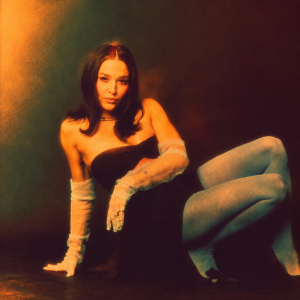
At 20 years old, Grace Bowers has already accomplished things that most musicians spend entire careers chasing. She’s performed at the GRAMMYs, shared stages with Dolly Parton, Chris Martin and Public Enemy, and established herself as one of the most promising young guitarists in contemporary rock. But while her professional life has accelerated at an extraordinary pace, her personal life is still navigating the awkward territory between adolescence and adulthood. That contradiction sits at the center of “19,” her latest single and accompanying music video, released ahead of her debut EP, Grace, arriving in November.
The Nashville-based guitarist and songwriter has spent much of her career being celebrated for what she can do with an instrument. Her command of blues, funk and rock guitar has earned her recognition well beyond her age group, but technical proficiency can become a peculiar kind of limitation when an artist is primarily known for playing someone else’s music. With Grace, Bowers is beginning to dismantle that distinction, trading the expectations attached to being a guitar prodigy for the considerably messier business of becoming a songwriter with something personal to say.
“19” explores a particularly strange version of the transition into adulthood. While her friends are moving into dormitories, getting jobs and establishing lives away from their families, Bowers is still living at home, despite having already built an international performing career. Her circumstances are hardly conventional, but the feelings underneath them are familiar: comparison, uncertainty, loneliness and the uncomfortable suspicion that everyone else has received instructions for adulthood that somehow never arrived in your mailbox.
“It’s a really weird time and I’m feeling a lot of different emotions,” Bowers explains. “I don’t have a full-time job. I’m still living at home, while some of my friends are totally moved out or living in dorms. I feel like I’m missing out.”
What makes the premise interesting is the reversal of the usual coming-of-age narrative. From the outside, Bowers appears to be ahead of her peers, having achieved professional milestones that many musicians twice her age never reach. Yet from her perspective, she’s watching friends experience ordinary rites of passage that her unconventional career has made difficult to share. Success hasn’t eliminated the confusion of growing up. In some respects, it has made that confusion harder to explain.
The song began in her bedroom, where Bowers turned to her guitar while trying to process those feelings. Rather than starting with a carefully constructed lyrical concept, she tuned the instrument down and searched for a riff that reflected her emotional state. That approach offers an important clue about the music she’s making now. Her guitar playing is no longer simply an opportunity to demonstrate technique; it’s becoming a means of expressing feelings that don’t necessarily translate into conversation.
The lower tuning also suggests a heavier musical direction, consistent with the punk and grunge influences shaping Grace. Although the release materials don’t detail the completed track’s arrangement, Bowers’ description of its origins points toward a more visceral, riff-driven approach than the virtuosic blues and funk performances that first brought her widespread attention. The emphasis is shifting from how impressively she can play to what she wants the guitar to communicate.
That distinction matters in a musical landscape where young instrumentalists can accumulate enormous online audiences through short demonstrations of technical ability. A spectacular guitar solo can generate millions of views, but developing an artistic identity requires more than producing another impressive performance. It requires songwriting, perspective and, perhaps most uncomfortably, a willingness to be heard when the music isn’t hiding behind technical fireworks.
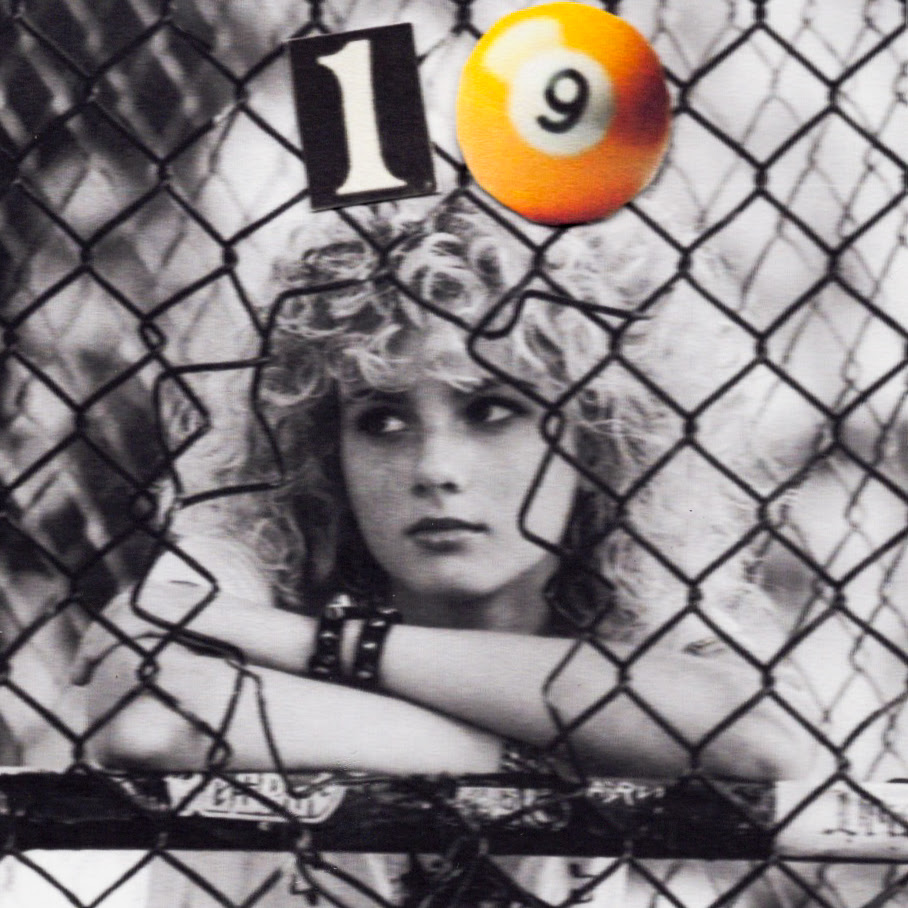
Bowers’ forthcoming five-track EP reflects that transition. Its earlier singles, “Eat Shit and Live” and “Cigarettes for Breakfast,” introduced a confrontational, punk-influenced direction, with the latter leaning into what the release describes as girly grunge. “19” approaches the same broader musical reinvention from a more vulnerable perspective. Together, the songs suggest an artist discovering that anger, humor, insecurity and emotional honesty can occupy the same record without contradicting one another.
The EP also marks a return to the music that initially made Bowers want to pick up a guitar. Although she grew up listening to Guns N’ Roses, she learned to play songs by the Ramones and the Ventures, developing an early affection for distorted power chords and the immediate physical satisfaction of loud rock music. Her new material draws from riot grrrl, 1990s grunge and contemporary pop, placing her within a lineage of musicians who have used abrasive guitars and direct songwriting to challenge expectations about femininity, youth and artistic credibility.
There’s a particular relevance to those influences now. As younger rock audiences continue rediscovering the sounds and aesthetics of 1990s alternative music, Bowers is approaching grunge and punk from the perspective of someone who grew up with their legacy rather than their original cultural moment. She isn’t attempting to recreate the circumstances that produced riot grrrl or the Seattle grunge explosion. Instead, she’s borrowing the musical language of those movements to articulate a distinctly contemporary experience of growing up under public scrutiny.
Helping her navigate that shift is producer Mike Elizondo, whose credits include Turnstile and Poppy. His involvement is significant because both artists have challenged traditional genre boundaries, demonstrating how heavy guitars, electronic production and pop sensibilities can coexist without sacrificing intensity. For Bowers, whose musical background already crosses multiple styles, that flexibility provides room to explore a more expansive identity as a vocalist and songwriter.

The timing of her October performances with The Linda Lindas also makes sense. Like Bowers, the Los Angeles punk band has attracted attention at a young age while developing music informed by earlier generations of punk and alternative rock. Their shared audiences are likely to be interested in the same collision of youthful perspective, distorted guitars and unapologetically personal songwriting. Bowers supported the group on dates in Saxapahaw, Athens, Nashville and Atlanta, with another performance scheduled for November 14 in Los Angeles alongside Sheryl Crow and other artists.
Perhaps the most revealing aspect of this transition is Bowers’ willingness to acknowledge that she’s effectively starting over. A year ago, she says, singing wasn’t even a regular part of her live performances. Now she’s fronting a rock show built around her own material, a considerable change for someone whose reputation was established largely through instrumental ability.
That willingness to abandon a comfortable professional identity may ultimately prove more important than any individual guitar performance. Plenty of accomplished musicians spend years protecting the qualities that first made them successful. Bowers appears increasingly interested in discovering what happens when she stops organizing her career around those expectations.
With “19,” the most compelling story isn’t simply that a gifted young guitarist has written an emotionally vulnerable song. It’s that someone who has already experienced extraordinary professional success is admitting she doesn’t have adulthood figured out. For a generation accustomed to measuring personal progress against everyone else’s carefully curated achievements, that uncertainty may be more relatable than another flawless guitar solo.

Grace arrives in November, with “19,” “Eat Shit and Live,” “Cigarettes for Breakfast,” “Hollywouldn’t” and “Fleas” forming its five-track introduction to Bowers as a songwriter and vocalist.
Featured image credit: Linda Eklov