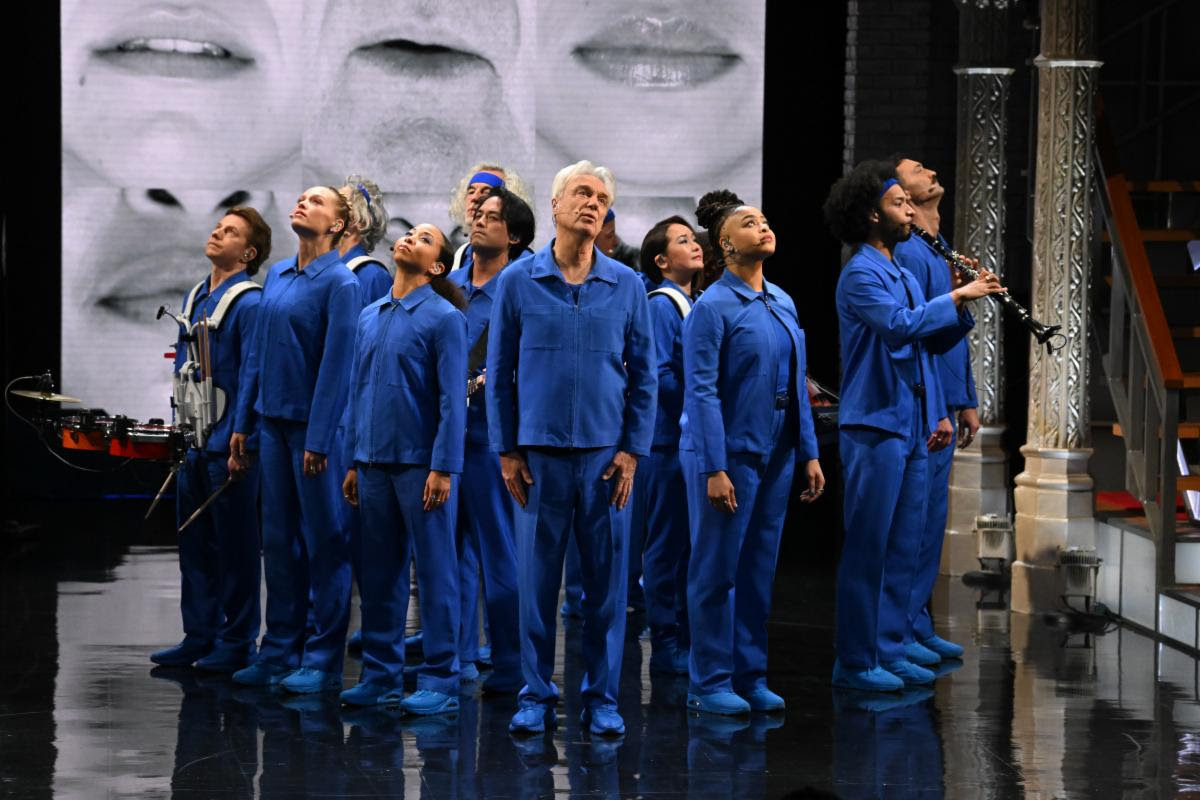
David Byrne performed “When We Are Singing” on The Late Show with Stephen Colbert in March 2026, appearing with a 12-member ensemble just days before the start of his 2026 North American tour.
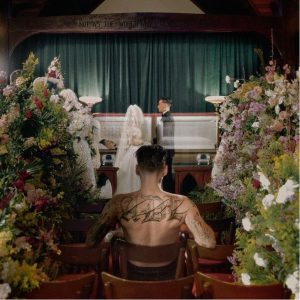
The performance arrives in support of his new album Who Is the Sky?, out now via Matador Records, and signals a renewed focus on Byrne’s live work following the extended impact of American Utopia. As expected, the staging leans into precision and movement, with tightly coordinated musicianship driving the performance rather than spectacle alone.
“When We Are Singing” unfolds through repetition and controlled build, emphasizing rhythm and structure over immediate release. Byrne’s approach remains consistent with his broader catalog, where choreography, arrangement, and visual composition function as extensions of the music itself.
David Byrne 2026 Tour Dates and Cities
The televised performance lands as interest in the David Byrne 2026 tour continues to grow. The North American run begins April 4 in Vancouver and moves through major cities across the U.S. before continuing internationally through the summer.
Key stops include:
- Vancouver, BC (April 4–5)
- Portland, OR (April 7–8)
- Stanford, CA (April 16)
- Las Vegas, NV (April 20)
- Nashville, TN (May 9)
- Baltimore, MD (May 16–17)
The tour also includes festival appearances at Coachella and New Orleans Jazz Fest, alongside an extended run of international dates across Europe and the UK. Tickets for the David Byrne 2026 tour are available now via his official website.
Inside Who Is the Sky?

Produced by Kid Harpoon and arranged with New York-based Ghost Train Orchestra, Who Is the Sky? marks Byrne’s first album since American Utopia. The project features contributions from Hayley Williams, St. Vincent, and Tom Skinner, expanding its sonic range while maintaining a clear structural identity.
Rather than chasing reinvention, Byrne leans into clarity. The album reflects a creative mindset shaped by experience, where experimentation feels intentional rather than exploratory. That same approach carries into the live show, where each element is tightly constructed but never static.
Decades into his career, Byrne remains less interested in revisiting past success than in refining the systems that made it possible in the first place.
Featured image credit: Scott Kowalchyk