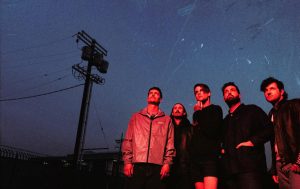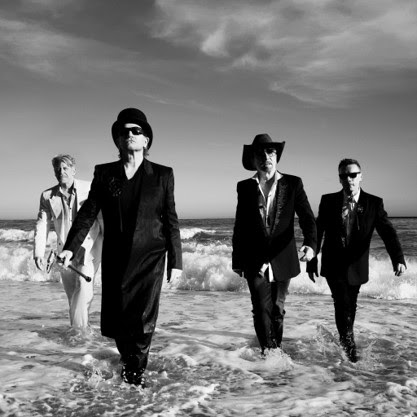
U2 has spent much of the past decade revisiting its own history. Now, as the Irish rock band celebrates its 50th anniversary, it is finally ready to write some new history.
The band has announced Carnaval De Luz, its 16th studio album and first collection of entirely new material since 2017’s Songs of Experience. Arriving November 13, 2026, via Interscope Records, the 12-track album reunites Bono, The Edge, Adam Clayton, and Larry Mullen Jr. with producer Jacknife Lee and a familiar cast of collaborators, including Brian Eno and Daniel Lanois. The announcement also comes with a new single, “Silencio,” a 2-minute, 35-second detour into surf punk that suggests U2 may be more interested in making noise than polishing its legacy.
That is a welcome development for a band whose recent output has largely revolved around reinterpreting its past. Between the re-recorded catalog of 2023’s Songs of Surrender, the archival discoveries of How to Re-Assemble an Atomic Bomb, and the technologically extravagant Achtung Baby residency at Las Vegas’ Sphere, U2 has spent considerable time reminding audiences of what it has already accomplished. Carnaval De Luz presents a different proposition: four musicians who have been playing together for half a century attempting to make something that belongs to the present.
And given the political climate of 2026, the timing feels deliberate.
The album’s title translates to “Carnival of Light,” and its concept follows a surprisingly elaborate spiritual calendar. Earlier this year, U2 surprise-released two six-track EPs, Days of Ash on Ash Wednesday and Easter Lily on Good Friday. Those projects addressed political upheaval, grief, friendship, and renewal from different perspectives. Carnaval De Luz completes the conceptual picture by returning to the celebration that precedes Lent, where excess and pleasure exist alongside the knowledge that darker days may be approaching.
It is an interesting framework for a band that has always struggled, sometimes magnificently, with the relationship between faith, politics, and popular entertainment. U2 has never been particularly comfortable separating the spiritual from the secular, and its most ambitious records have often emerged from that tension. On The Joshua Tree, American mythology collided with religious imagery and political disillusionment. On Achtung Baby, irony, technology, and European nightlife offered an escape from the band’s increasingly earnest public identity.
Carnaval De Luz appears to be reaching toward both impulses. There is the familiar U2 conviction that music can confront a troubled world, but there is also an insistence on pleasure, spectacle, and the occasionally ridiculous business of being a rock band.
“Silencio” is an especially intriguing introduction to that approach. Described as an homage to early surf punk, the song represents a stylistic departure from the expansive, atmospheric rock most commonly associated with U2. Its unusually brief running time also suggests a willingness to abandon the stadium-sized buildup in favor of something more immediate. With additional production from Ryan Tedder, the track sits at an unexpected intersection of punk irreverence and the band’s long-standing relationship with mainstream pop production.
The accompanying music video was filmed in Mexico City and directed by Mexican-American duo Cliqua, comprising Pasqual Gutiérrez and Raúl “RJ” Sanchez. It follows July’s “Street of Dreams,” the first song released from the forthcoming album.
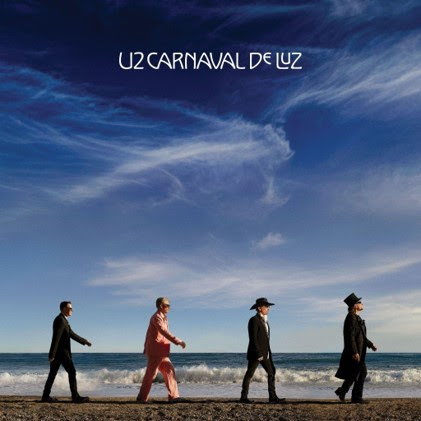
Elsewhere, the record’s credits suggest a much broader musical palette. Brian Eno contributes songwriting and synthesizers to “Go (Carnaval De Luz),” “The Greatest Show on Earth,” and “Can’t Stop Us Now,” reconnecting the band with one of the architects of its most adventurous work. Martin Garrix receives a co-writing credit on “Glorify,” introducing an electronic dance music perspective, while Daniel Lanois contributes pedal steel to the album’s closing track, “Torn.”
The inclusion of Eno is particularly significant. His collaborations with U2 helped transform the band from a comparatively straightforward post-punk outfit into one capable of making atmospheric, experimental rock on a massive commercial scale. His presence does not guarantee another The Unforgettable Fire or Achtung Baby, nor should it. But it does suggest that the band is revisiting the creative relationships that encouraged its greatest reinventions rather than simply reproducing their results.
The album also features “The Mirror Maker,” with Rosalía named in the track listing, although the announcement does not clarify the extent of her contribution. That pairing, alongside the Garrix collaboration, points toward a band still interested in the musical world beyond traditional rock, even as its anniversary celebrations could easily have provided an excuse to retreat into familiar territory.
Perhaps the most emotionally significant track is “Torn,” a country duet credited to Bono and Dolly Parton, co-written with Johnny McDaid and featuring Lanois on pedal steel. According to the announcement, the song examines fractured family relationships and connects the album’s themes of celebration, loss, and reconciliation.
The track also provides a bridge between the three releases in U2’s 2026 cycle, bringing the project back to the more intimate emotional territory explored on Easter Lily.

What makes this release especially interesting is that U2 is not approaching its 50th anniversary with a conventional greatest-hits package or another elaborate exercise in nostalgia. The band is instead releasing 24 new songs across three projects in a single year, an unusually prolific statement from a group whose last proper studio album arrived nine years ago.
That does not automatically make Carnaval De Luz a creative renaissance. Fifty years into a career, the challenge is no longer proving that U2 can fill stadiums, sell records, or construct a spectacular live production. Those questions were answered decades ago. The more interesting question is whether the band can still surprise an audience that knows its mythology almost as well as its music.
Bono has described the album as an attempt to make the melodies sweeter and the drums louder in response to a world growing darker. It is an ambitious sentiment, and one that will inevitably invite scrutiny from listeners who have spent decades debating the relationship between U2’s political convictions and its enormous commercial machinery.
But there is something appealing about a band this established refusing to treat longevity as an excuse for artistic caution.
After 50 years, U2 certainly has nothing left to prove commercially. Whether Carnaval De Luz can justify another chapter in its musical history is a far more interesting question.
Carnaval De Luz arrives November 13 via Interscope Records. “Silencio” is available now.
Featured image credit: Viviane Sassen