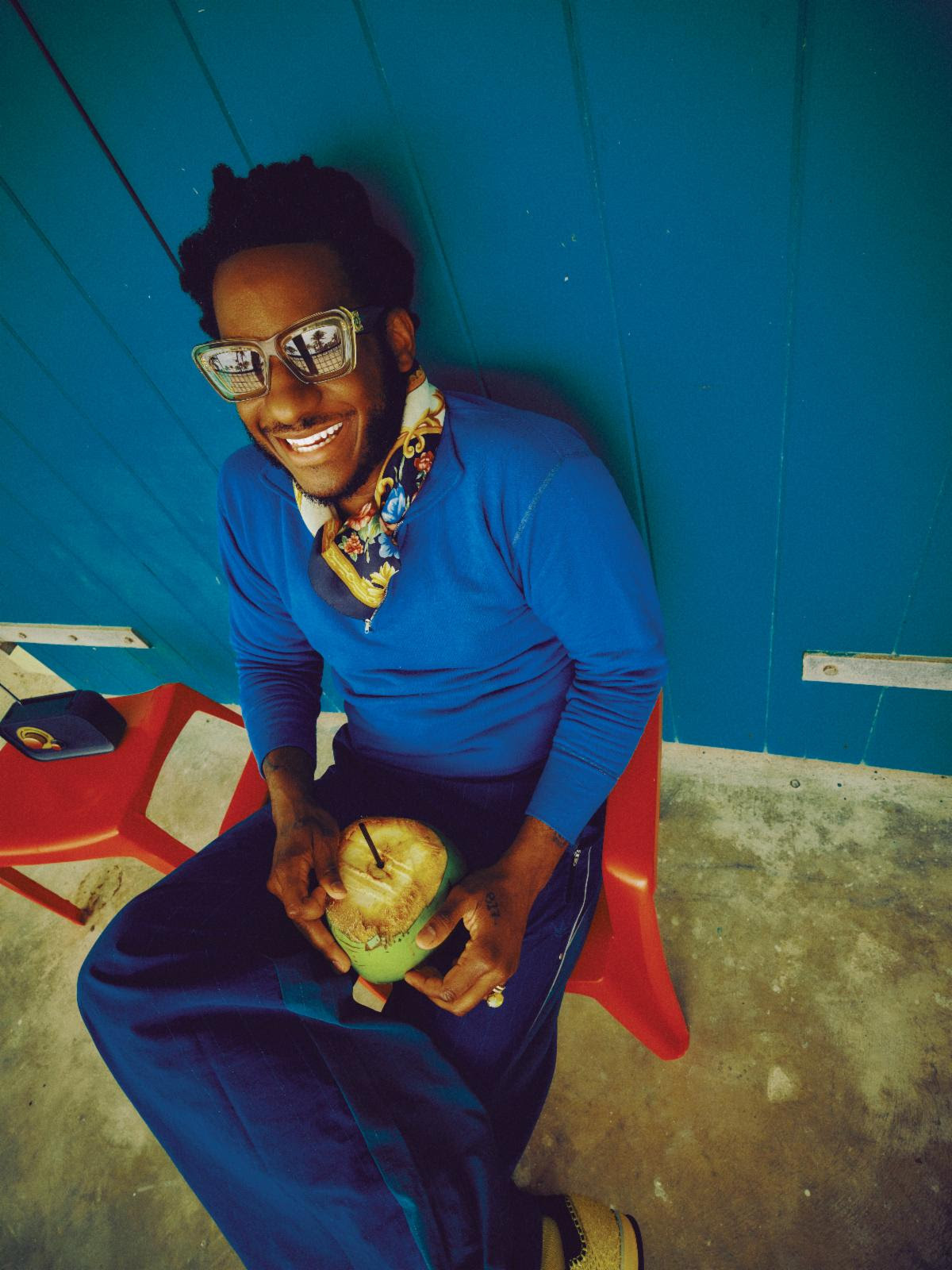
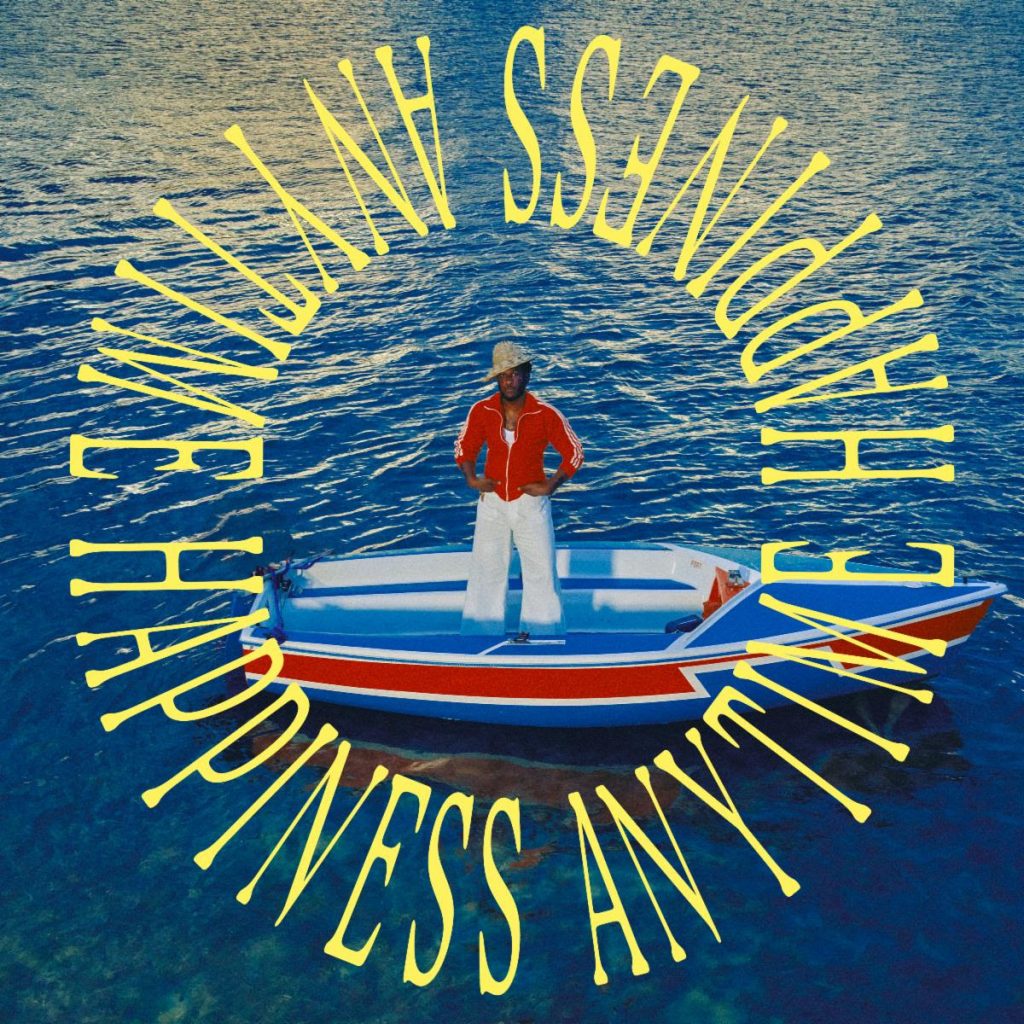
Leon Bridges is continuing the rollout of his next studio album, Happiness Anytime, with four new songs that offer a broader look at the soul singer’s increasingly rhythm-driven new era. The album arrives September 25 via Columbia Records and was produced by J Lloyd-Watson and Lydia Kitto of British trio Jungle.
The latest release includes “Talk It Over,” “Happiness Anytime,” “All Day All Night” featuring Kitto and “Fly Baby.” Together, the songs comprise the second of three four-track releases that will ultimately form the full-length album. The first installment introduced “Light The Way,” “Tears of Joy,” “Illusion” and “Your Love Is Electric.”
“Talk It Over” arrives with an official music video filmed in Amsterdam and directed by D+Y, with choreography by Plue Agency. Movement is central to the visual, reflecting Bridges’ larger creative direction for Happiness Anytime: music intended not only to be heard, but physically felt.
That philosophy marks an interesting turn for Bridges. After emerging with the vintage soul of his 2015 debut Coming Home, he steadily expanded his palette through Good Thing, Gold-Diggers Sound and 2024’s deeply personal Leon. His collaborations with Khruangbin on Texas Sun and Texas Moon further demonstrated how naturally his voice could inhabit music built around atmosphere and groove.
Happiness Anytime appears to bring those different sides of Bridges into the same room.
“For me, happiness is not a feeling that you chase,” Bridges says. “I want this album to be something that lingers with people and lingers in people’s bones.”
The album began after Bridges connected with Lloyd-Watson and Kitto following years of crossing paths at festivals. What was intended as a low-pressure writing session in Los Angeles quickly became something more substantial. Their first four-day session produced six songs, ultimately accounting for half of the completed record.
Rather than endlessly revisiting ideas, the collaborators worked quickly and intuitively, attempting to complete a song during each session. That immediacy became part of the album’s identity. Bassist Pino Palladino, whose credits include D’Angelo, Adele and John Mayer, also joined the musicians at Chaplin Recording Studios in Los Angeles.
Sonically, the project reaches beyond any single genre. Bridges and his collaborators drew from soul, disco, Afrobeat, Brazilian and South American music, with influences including Fela Kuti and Sergio Mendes informing the rhythmic vocabulary of the sessions. The goal, however, was not to make a collection of stylistic exercises. Groove became the connective tissue.
It also gave Bridges an opportunity to return to something that had become less prominent in his performances: dancing.
Early in his career, Bridges regularly stepped away from his instruments and moved freely across the stage. With Happiness Anytime, he deliberately wanted to make music that would allow him to do that again. His new “Leon Bridges Presents Happiness Anytime” stage production expands on the idea with a vinyl DJ, horn section and three backing vocalists while putting Bridges back at the front of the stage.
Bay Area audiences recently received a preview when Bridges brought the new material to Outside Lands in San Francisco, one of several pop-up performances used to introduce the album this summer. Other appearances have taken place in Paris, Cannes, Los Angeles, London, Chicago and at the Montreux Jazz Festival.
The title track also helps explain the larger idea behind the record. Happiness Anytime treats joy less as a permanent emotional state than something that can be accessed through presence, community and movement.
“There’s this feeling that we have to fix the problems of the world; you feel inadequate or it can be debilitating,” Bridges says. “My role is to be light. I hope that comes across with this album.”
The brightness does not mean the album avoids more complicated territory. Songs including “Tears of Joy” examine sacrifice and artistic longevity, while “Illusion” turns toward presence and hard-earned perspective. That tension gives the record’s optimism more weight. Happiness is not presented as the absence of difficulty, but something that can exist alongside it.
Bridges has spent more than a decade widening the boundaries around the sound that first introduced him to audiences. His debut earned a GRAMMY nomination, Good Thing brought him his first GRAMMY win for “Bet Ain’t Worth the Hand,” and Gold-Diggers Sound pushed his contemporary R&B experimentation further. His catalog has also grown through collaborations with Khruangbin, John Mayer, Kacey Musgraves, Robert Glasper, Terrace Martin, Gary Clark Jr., Gunna, The Avalanches and Shaboozey.
With Happiness Anytime, that evolution appears to be circling back toward one of music’s most basic functions: giving people a reason to move.
The album arrives September 25 via Columbia Records.
Featured image credit: Joshua Kissi