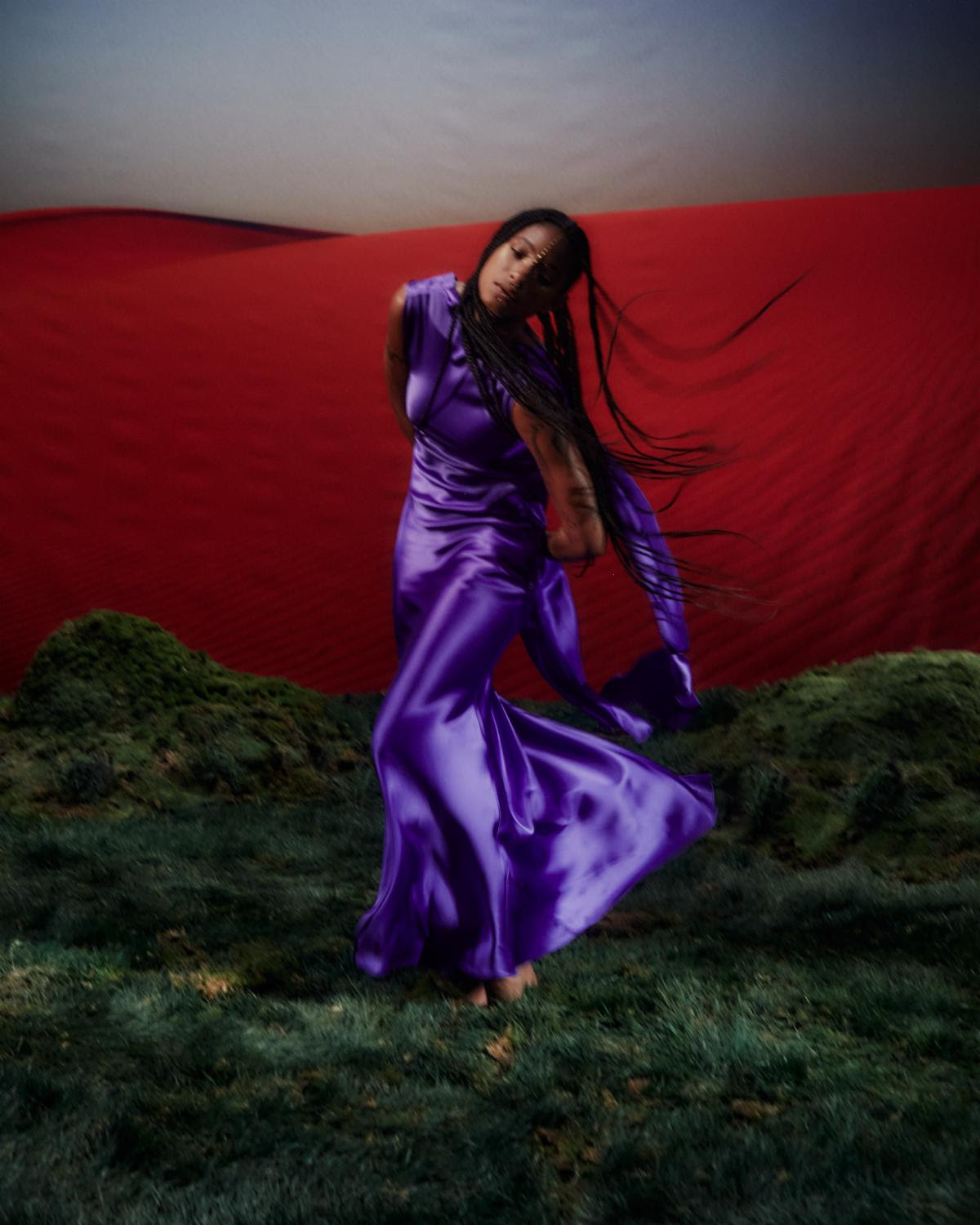
Artist: WILLOW
Album: The Thread
Release Date: July 24, 2026
Label: Three Six Zero Recordings
Rating: ★★★½☆ (3.5/5)
Over the past couple of weeks, it’s really been my pleasure to preview WILLOW’s new album, The Thread. While it wasn’t what I expected it to be, it ultimately left me contemplative, which I think is exactly what good art is supposed to do. The records that stay with you aren’t always the ones you immediately fall in love with. Sometimes they’re the ones that challenge your expectations, make you rethink an artist, and reveal something new with each listen. That’s exactly what happened here.
Released today, The Thread marks WILLOW’s second full-length album of 2026, arriving just months after petal rock black. That’s an incredibly quick turnaround for any artist, but what surprised me even more than the pace was how dramatically different these two records are from one another. Rather than simply expanding on the sound of her previous release, WILLOW has chosen to pivot almost entirely, and in doing so she’s delivered what feels like the beginning of an entirely new chapter in her career.
Up until now, I’ve always thought of WILLOW primarily as an alternative rock artist. The last time I saw her perform was at Outside Lands, and in my opinion she was the perfect artist for that environment. She was playing one of the festival’s wooded stages, surrounded by eucalyptus trees, where it genuinely felt like humanity and nature were blending together. That’s one of the things I love about Outside Lands. You’re immersed in Golden Gate Park rather than standing in a parking lot or an arena, and WILLOW’s music fit that setting beautifully. Because of that experience, I walked into The Thread expecting another record that built on the foundation of petal rock black, which leaned heavily into distorted guitars, progressive rock influences, and a darker sonic palette.
Instead, The Thread takes a sharp left turn.
I hesitate to call it a concept album because WILLOW herself hasn’t presented it that way, but it certainly behaves like one. The entire record feels connected by a common thread of spirituality, self-discovery, and personal transformation. Whether that’s the result of her travels to India, the new influences she’s embraced, or simply the natural process of growing up, this album feels like the sound of someone experiencing a genuine awakening. More than anything, it feels like a coming-of-age record. Rather than chasing the sound that first introduced many listeners to her, WILLOW appears determined to discover what her own artistic voice sounds like when she isn’t confined to any one genre.
That was the biggest surprise for me.
I expected guitars. I expected heavier alternative rock. Instead, what I found was an earthy, spiritual, jazz-infused R&B record that draws from influences like Erykah Badu, Florence + the Machine, Feist, and artists from her parents’ generation, if not earlier. There are moments throughout the album that feel deeply rooted in soul, jazz, folk, and world music, creating a listening experience that’s far more organic than I anticipated. It isn’t simply a stylistic shift for the sake of change. It genuinely feels like WILLOW is exploring who she is becoming both as a musician and as a person.
That’s a brave move. Plenty of artists find a sound that works commercially and stay there. WILLOW seems more interested in following her own creative instincts, even if that means surprising the audience that discovered her through her rock-oriented work. I admire that approach because I’d much rather hear an artist take a genuine creative risk than play it safe by making the same album over and over again.
One of the most noticeable evolutions is the way she approaches her voice. I’ve always known WILLOW as a talented guitarist, bassist, and vocalist, but on The Thread her voice becomes the lead instrument. You can hear the work she’s put into developing it. She stretches her range, experiments with texture, and uses techniques that remind me of artists like Florence Welch and Feist, where the voice itself carries as much emotional weight as any instrument in the arrangement. At times she incorporates vocal flourishes that almost resemble yodeling or other folk traditions, using her voice to create texture rather than simply deliver lyrics. It’s something I also admire in great country singers, treating the voice as an instrument rather than simply a vehicle for words, and WILLOW embraces that philosophy throughout this record.
That doesn’t mean every experiment lands.
The opening stretch of the album is admittedly its weakest section. I wouldn’t necessarily call it rough, but there is a certain choppiness that makes the first few songs feel slightly uncertain. I found myself wondering exactly where the album was going and whether I was connecting with it. Fortunately, somewhere around the middle of the record everything begins to loosen up. The sequencing starts flowing more naturally, the songwriting finds its rhythm, and the album settles into the meditative space that ultimately defines it.
That’s why I think The Thread is best experienced from beginning to end. While there are certainly standout tracks, this isn’t an album I’d recommend listening to in fragments. It’s the kind of record you put on while you’re making dinner, washing dishes, or simply allowing yourself an hour to unplug. Even if it isn’t officially a concept album, it rewards listening to it as a complete experience. I really do think that was a deliberate creative choice.
Among the highlights, the title track immediately stood out. “The Thread” is catchy, fresh, and unlike anything I’ve heard from WILLOW before. I especially appreciated the way she approaches her instrumentation. There are moments where her guitar playing takes on almost sitar-like qualities, with delicate harmonics, plucked textures, and tonal choices that feel inspired by Indian musical traditions. Whether intentional or simply an influence she’s absorbed over time, it gives the song a distinctive personality that separates it from her earlier work.
I was equally drawn to “Shrink to Fantasy,” which carries a warm ’90s R&B atmosphere supported by exceptional jazz musicianship. Throughout the album, I found myself appreciating how naturally WILLOW fits alongside a full band playing these rich arrangements. There’s something about hearing her surrounded by warm keyboards, jazz chords, layered percussion, and soulful instrumentation that simply works. I’d honestly love to hear her continue down this road because it complements her artistry remarkably well.
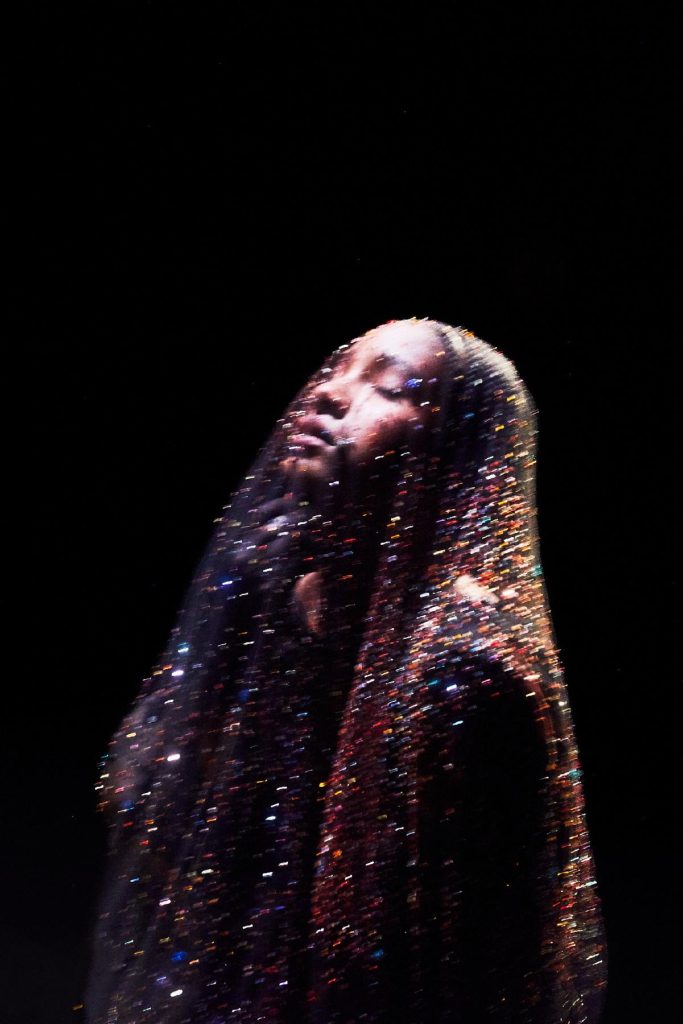
The emotional centerpiece of the album, however, is “Tall Baby.” For me, it contains some of the strongest and most vulnerable songwriting on the entire record. Musically, it twists and turns in unexpected ways instead of following predictable structures, and emotionally it’s where the album feels most grounded. It’s the song I kept coming back to after repeated listens, and the one that best captures the calm, reflective energy running through the entire project.
The rollout surrounding The Thread has reflected this artistic evolution as well. In recent weeks WILLOW has introduced material from the album on Jimmy Kimmel Live! while also bringing these songs to audiences at the Montreal International Jazz Festival. Watching those performances, it became clear that this isn’t simply a studio experiment. This is the direction she’s actively moving as a live performer, and it’ll be fascinating to watch how these songs continue to evolve once they’re played night after night in front of audiences.
I also think this material has enormous potential in a live setting, particularly in intimate jazz clubs, blues venues, and smaller theaters rather than traditional rock spaces. Those environments would allow these arrangements to breathe while introducing WILLOW to audiences who may never have connected with her earlier work. I think this chapter of her career has the potential to expand her audience in ways her previous releases couldn’t, simply because these songs invite listeners from so many different musical backgrounds.
What I admire most about The Thread is its willingness to surprise people. WILLOW could have easily made another alternative rock record, knowing that’s what many fans expected from her. Instead, she essentially cleared the table and presented something completely different. That takes confidence. Whether every experiment succeeds is almost beside the point. The bravery comes from allowing yourself to evolve publicly, knowing not everyone is going to come along with you immediately.
As for the inevitable conversation about WILLOW being a nepo baby, I honestly don’t find it particularly relevant here. Yes, she comes from one of the most recognizable families in entertainment. We all know that. But talent still has to be developed, artistic risks still have to be taken, and compelling music still has to be created. Unlike artists who simply coast on a famous last name, WILLOW has consistently challenged herself creatively, and that’s something I respect. Whatever doors her family may have opened, The Thread ultimately succeeds or fails on its own merits.
More than anything, I really see WILLOW turning the page from being a remarkably talented young lady into a fully realized woman with this album. There’s an ancestral quality running through these songs, a sense of sacred intentionality that gives the record emotional weight even when every individual track doesn’t resonate equally. I don’t love every song on the album, but I don’t love every song on any album. What matters is the overall experience, and The Thread succeeds because it invites listeners to slow down, stay present, and experience the journey from beginning to end.
I’m genuinely curious to see where WILLOW goes from here. If this album is any indication, she’s no longer interested in fitting neatly into one genre or one expectation. She’s carving out a space that’s uniquely her own, and whether you’re a longtime fan or discovering her for the first time, that’s a journey worth paying attention to.
Featured image credit: WILLOW