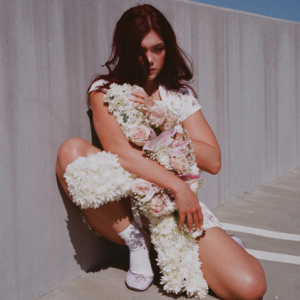
2hollis has spent the past several years making music that sounds as though several different genres are fighting for control of the same recording. Electronic music, underground rap, industrial techno, and pop have all found their way into his catalog, frequently colliding in ways that make conventional genre classifications seem increasingly pointless. With his latest single, “Warhorse,” the Los Angeles artist is continuing that approach while preparing for what could be his most commercially significant release yet.
Released via Interscope Records, “Warhorse” is the latest preview of Pirouette, 2hollis’ forthcoming fifth studio album, arriving November 11. The song follows “Hurt” and “Sex,” two singles that have already established a more romantic and emotionally expressive direction for the producer and songwriter. But unlike a traditional album rollout, “Warhorse” had been circulating through his live performances for months before its official release, allowing audiences to develop a relationship with the track long before it appeared on streaming platforms.
That distinction matters, particularly for an artist whose popularity has developed as much through online communities and live performances as through conventional music industry promotion. By incorporating unreleased material into festival sets, 2hollis has effectively turned his concerts into testing grounds for new music, allowing anticipation to build organically among fans who are already deeply invested in his evolving sound.
It is also a strategy that reflects how electronic music and underground rap increasingly operate. Unreleased tracks become recognizable through live recordings, social media clips, and fan communities before they are formally distributed. For artists with sufficiently devoted audiences, the official release is no longer necessarily the moment a song is introduced. Sometimes it is simply the moment everyone finally gets to hear the entire thing.
“Warhorse” arrives at an especially interesting point in 2hollis’ career. His 2025 album star established him as a serious contender beyond the internet communities that initially embraced his music, reaching No. 11 on Billboard’s Top Dance Albums chart and earning recognition for its ambitious combination of electronic production and emotionally direct songwriting. His earlier projects, including White Tiger, 2, and boy, helped establish a musical identity that drew from disparate corners of underground culture without sounding particularly interested in belonging to any one of them.
Where those recordings frequently emphasized experimentation and abrasive production, the material surrounding Pirouette suggests a growing interest in melody, romantic themes, and the possibilities of more accessible pop structures. “Sex,” in particular, brought an unexpectedly affectionate perspective to a subject that contemporary pop frequently approaches through provocation or detachment. Its EDM-influenced production demonstrated that 2hollis could pursue emotional sincerity without abandoning the high-impact electronic sound that has become central to his identity.
“Warhorse” adds another piece to that developing picture, although the release announcement offers little detail about its specific arrangement or lyrical content. What is clear is that 2hollis is continuing to position Pirouette as a project that balances the intensity of his earlier work with a more expansive emotional vocabulary.
The album’s visual presentation is equally important to understanding where he is headed. Its artwork was hand-drawn by acclaimed Japanese artist Yoshitaka Amano, whose illustrations helped establish the visual identity of the Final Fantasy video game franchise. Amano’s distinctive combination of delicate figures, elaborate fantasy imagery, and theatrical elegance might initially seem like an unusual pairing for an artist associated with distorted electronic production and chaotic live performances.
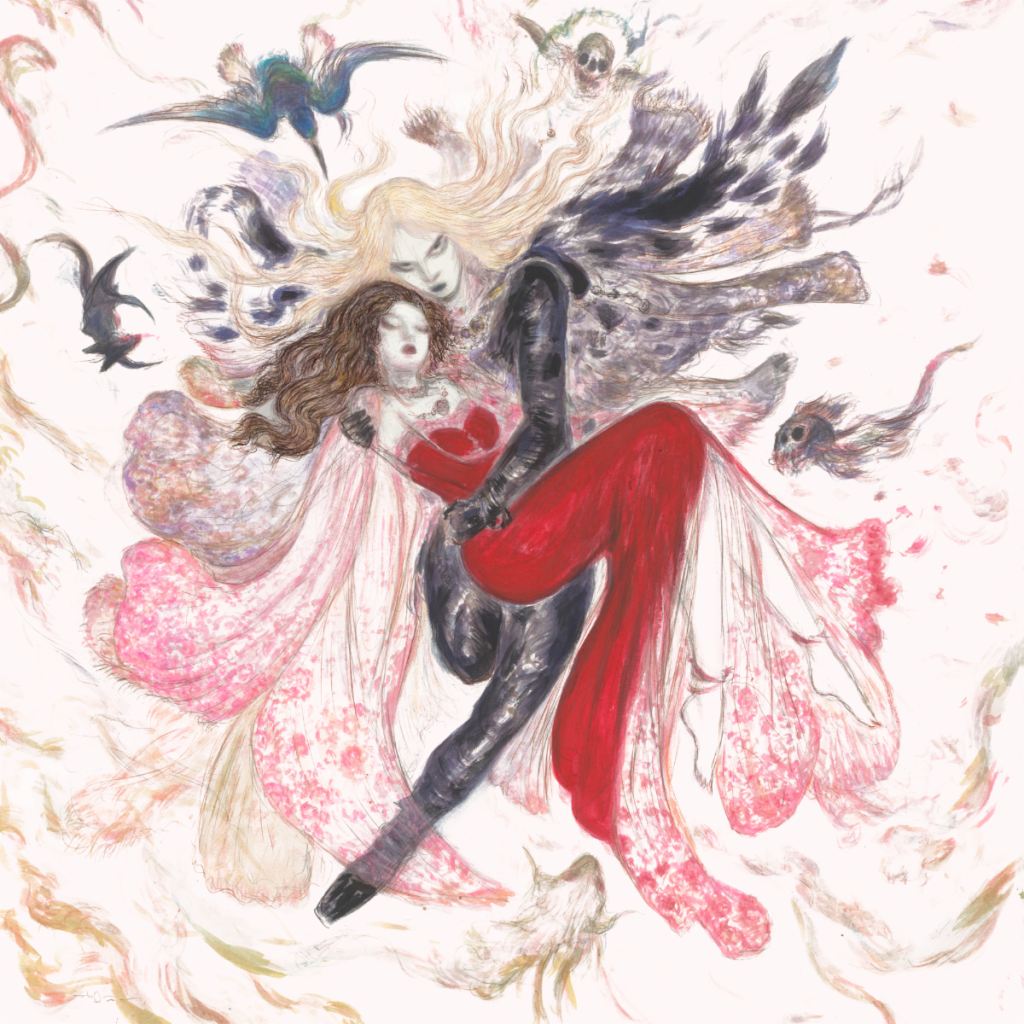
But the collaboration makes considerable sense when viewed through the larger aesthetic world 2hollis has constructed. His music has always contained an element of fantasy, whether through its dramatic production, heightened emotional language, or the elaborate visual identity surrounding his releases. Amano’s artwork gives that sensibility a more explicitly romantic and mythological dimension.
“There is a delicate, sensitive quality to 2hollis that aligned perfectly with the image I had in mind for the artwork,” Amano explains.
The artist also described 2hollis as resembling a character who could have emerged directly from one of his paintings. That observation offers a useful way of understanding the collaboration. Rather than commissioning artwork designed simply to advertise a record, 2hollis has aligned himself with an established visual artist whose work already occupies a similar imaginative territory.
It also reflects a broader change in how emerging musicians are establishing cultural influence. For artists operating at the intersection of electronic music, fashion, gaming, and internet culture, an album’s visual identity can be as important to its reception as its singles. The artwork, clothing, photography, and surrounding mythology become interconnected parts of the same creative project.
That crossover is becoming increasingly visible in 2hollis’ career. His recent appearance as a global print cover star for i-D follows features in Dazed, 032c, Office, and other fashion and culture publications, suggesting that his appeal extends well beyond listeners interested in experimental electronic music.

The industry’s interest is understandable. At a moment when mainstream pop is increasingly borrowing production techniques and aesthetics from underground electronic scenes, 2hollis represents an artist who developed those instincts independently before attracting major-label attention. His music does not necessarily need to be translated into a more conventional format to reach larger audiences. The audience itself has become more receptive to sounds that would once have been considered too abrasive or unconventional for pop.
His association with rapper Ken Carson further illustrates that crossover. Both artists have built substantial followings through online communities and live performances that prioritize physical intensity, blurring the distinction between rap concerts, electronic raves, and punk shows.
For 2hollis, that increasingly fluid cultural landscape presents an opportunity to expand without entirely abandoning the experimental instincts that established his reputation.
The more interesting question surrounding Pirouette is whether its romantic themes and increasingly elaborate visual presentation will produce a genuinely different kind of record, or simply offer a more polished version of the music his audience already knows.
There is a fine line between artistic development and the sort of calculated refinement that often accompanies an artist’s transition from underground popularity to major-label expectations. So far, 2hollis has demonstrated an unusual willingness to move between contrasting musical identities, making that distinction particularly difficult to predict.

With “Warhorse,” the rollout continues, but the larger story is becoming increasingly apparent. 2hollis is no longer simply an underground producer attracting attention for his unusual sound. He is developing into an artist whose music, visual identity, and cultural influence are becoming increasingly difficult to separate.
Whether Pirouette delivers on those ambitions remains to be heard. But the combination of electronic experimentation, pop songwriting, and Amano’s fantasy-inspired artwork suggests that 2hollis is interested in building something considerably larger than another collection of singles.
Pirouette arrives November 11 via Interscope Records. “Warhorse” is available now.
Featured image credit: Interscope Records