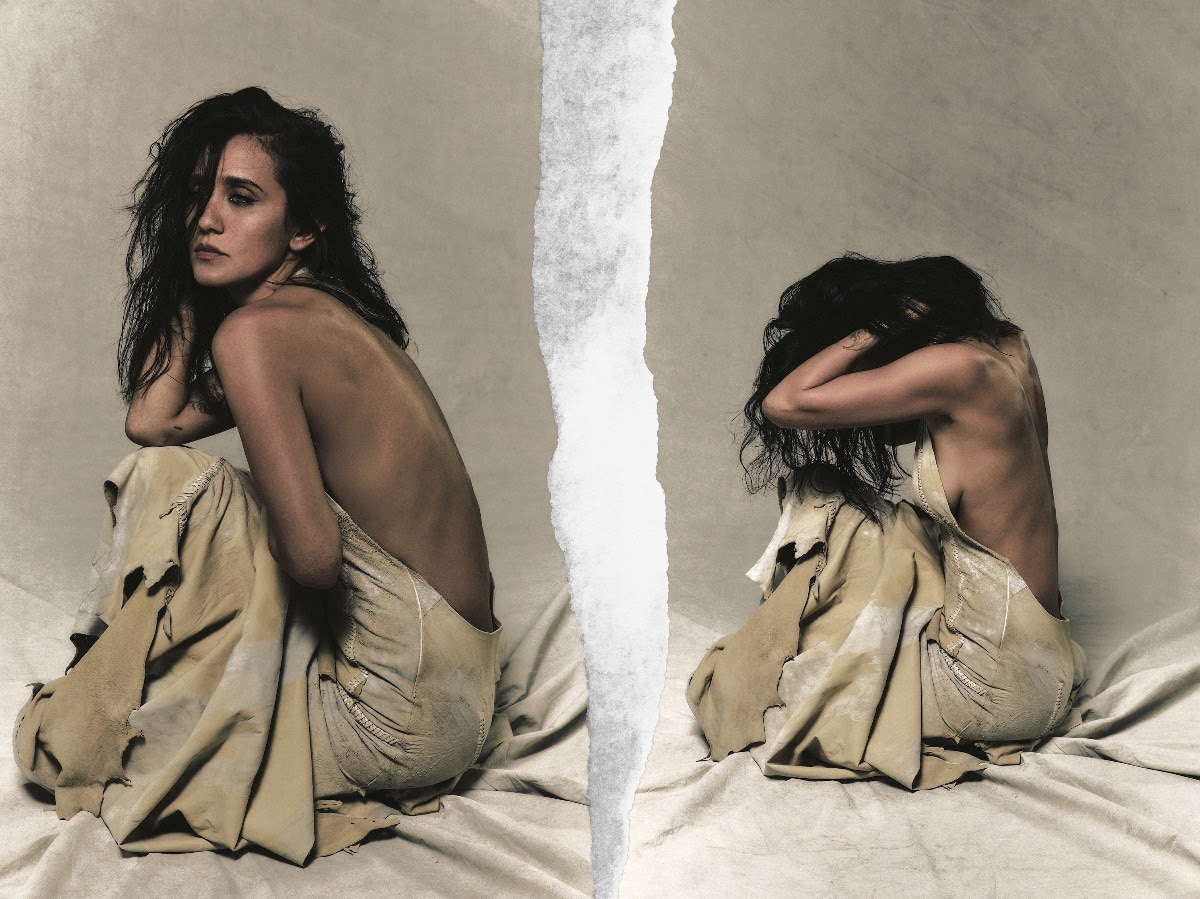
Jesse Jo Stark has always had a taste for the macabre. Her musical universe is populated by doomed romances, vintage horror, rockabilly ghosts and the kind of glamorous heartbreak that looks particularly good under red lighting. But on her forthcoming album MUSE, arriving November 6, the singer-songwriter is apparently trading some of that theatrical darkness for something considerably more frightening: emotional honesty without the costume.
The album’s first single, “colorado,” introduces that shift with a stripped-back arrangement, intimate vocals and a melancholy that doesn’t need much decoration. Written during a three-week retreat in Aspen, Colorado, the song is the first glimpse of a 13-track collection that moves Stark toward Americana, understated rock and more exposed songwriting while retaining the gothic sensibility that has made her work recognizable.
What makes this development interesting is that Stark’s artistic identity has never been particularly difficult to recognize. Between her music, her work with Chrome Hearts and her own fashion label DEADLY DOLL, she has constructed a distinctive visual and musical world indebted to vintage Americana, punk, The Cramps and B-movie horror. Her aesthetic is so thoroughly developed that it could practically have its own zip code. The question for MUSE is what happens when an artist whose presentation is so carefully considered begins removing the elements that usually provide emotional distance.
On “colorado,” the answer appears to be restraint. Rather than building toward the dramatic arrangements associated with some of her earlier material, the song relies on simple, melancholic guitar work and a deliberately minimal production approach. Stark’s vocals are dry and close, with much of the original recording reportedly left untouched. That decision matters because a singer whose work frequently embraces cinematic atmosphere is now allowing the imperfections and vulnerability of her delivery to carry more of the emotional weight.
There is an important distinction between making a song sound sad and allowing it to feel uncomfortable. Reverb, distortion and elaborate arrangements can create an impressive atmosphere, but they can also provide somewhere to hide. The production described for “colorado” suggests Stark is interested in the opposite. Instead of enlarging the emotional landscape, she is reducing the distance between the listener and the person singing.
Stark describes the song as “the womb of the mountains,” a phrase that gives the album’s geographical setting a more personal significance. Colorado wasn’t simply a picturesque backdrop for a writing retreat. According to Stark, the isolation provided enough separation from her everyday life to approach feelings she had previously struggled to articulate.
“It was the time to speak without boundary,” she recalls. “Even though I felt broken, I also felt an immense amount of freedom. Each day felt so precious. Like I was dancing with a woman I had been hiding from. I was clear.”
That image of confronting a previously hidden version of herself is more revealing than the familiar promotional language about vulnerability and personal growth. Stark is describing an encounter with her own identity, one in which emotional collapse and liberation are not necessarily opposing experiences. Sometimes the moment when everything stops making sense is also the moment when a person becomes capable of telling the truth.
For an artist whose influences range from Merle Haggard to The Cramps, the movement toward melancholic Americana isn’t as dramatic a stylistic departure as it might initially appear. Country music and gothic rock have always shared a fascination with death, desire, betrayal and people making terrible decisions for reasons they consider perfectly reasonable. Both traditions understand that heartbreak can be theatrical, but the strongest songs usually contain something painfully ordinary beneath the spectacle.
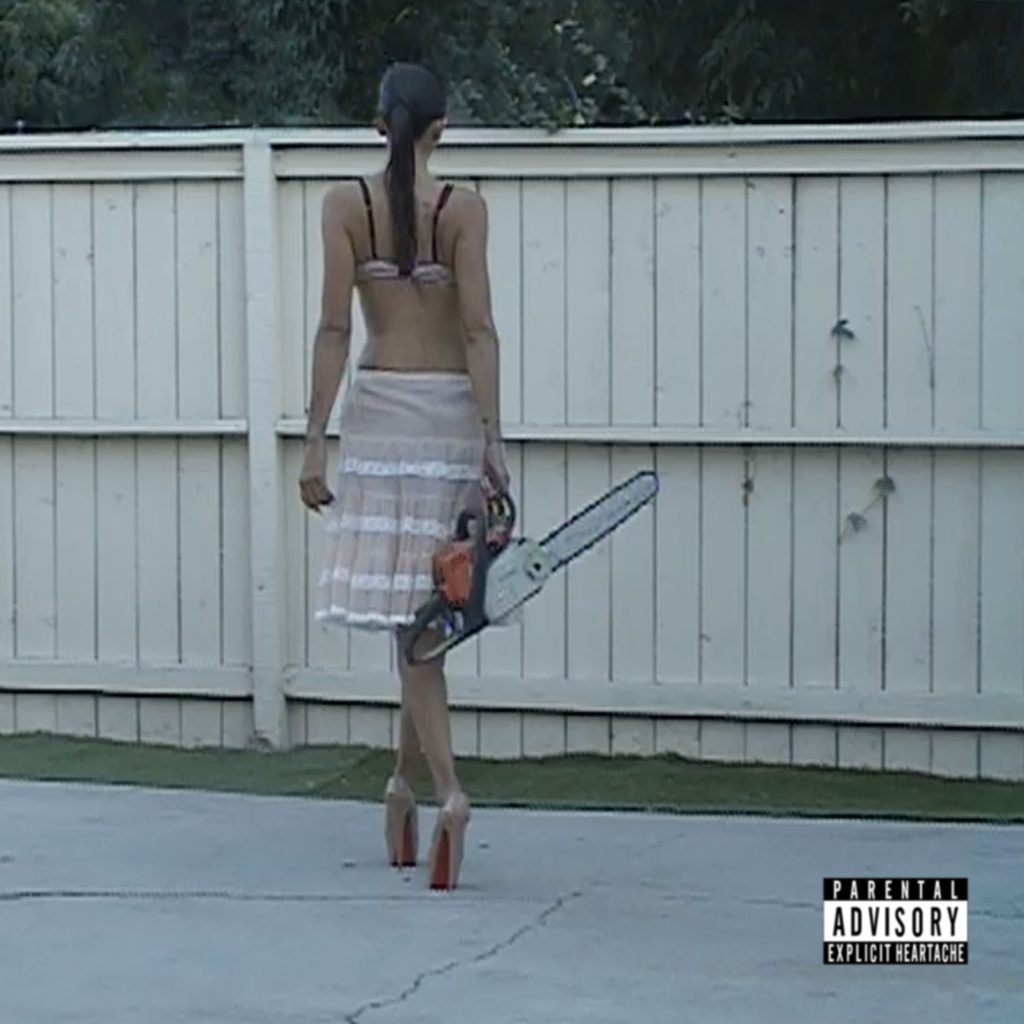
Stark has spent years exploring those intersections, incorporating elements of country, punk and vintage rock into a sound that resists straightforward classification. Her previous releases have often emphasized their darker, more stylized qualities. MUSE appears to shift the emphasis toward the songwriting itself, suggesting that the next stage of her development may depend less on expanding her aesthetic than on deciding which parts of it are necessary.
The album was created alongside close friends and collaborators during three snow-covered weeks in Aspen, an environment that allowed Stark to write without a predetermined destination. Its 13 tracks include “beautiful goodbye,” “chaos,” “the raven,” “she is a flower,” “hollywoods afraid of love,” “sugar crash” and “age of being honest.” Even without hearing the complete record, the titles suggest a continued preoccupation with love, loss, identity and the uneasy process of understanding oneself.
There is also a broader musical context worth considering. In an industry where artists are increasingly encouraged to build instantly recognizable identities across streaming platforms, fashion, social media and live performance, Stark has already demonstrated an ability to operate across several creative disciplines. Her involvement with Chrome Hearts and DEADLY DOLL gives her an established presence in fashion, while her touring history includes opening slots for Post Malone, Guns N’ Roses, Jane’s Addiction, The Vaccines and The Veronicas.
That crossover matters because Stark isn’t approaching MUSE as an unknown songwriter trying to establish an aesthetic. She already has one. The more interesting challenge is whether the music can reveal something that the imagery cannot.
The accompanying “colorado” video reportedly extends the song’s themes of isolation, romance and emotional suspension. For an artist with such a strong visual imagination, the relationship between image and sound remains important, but this time the emphasis seems to be on creating space rather than filling every corner of it.
Stark has described the writing process in considerably less romantic terms than the album’s mountain setting might suggest. “Writing is like bleeding,” she says, adding, “It’s gonna be a bitch to sing these songs.”
It’s a useful reminder that personal songwriting can be much easier to celebrate in retrospect than to perform every night. A song written in private, during a period of emotional upheaval, becomes something entirely different once it belongs to an audience. The same details that make a recording feel intimate can become difficult to revisit when the artist is expected to reproduce them onstage.
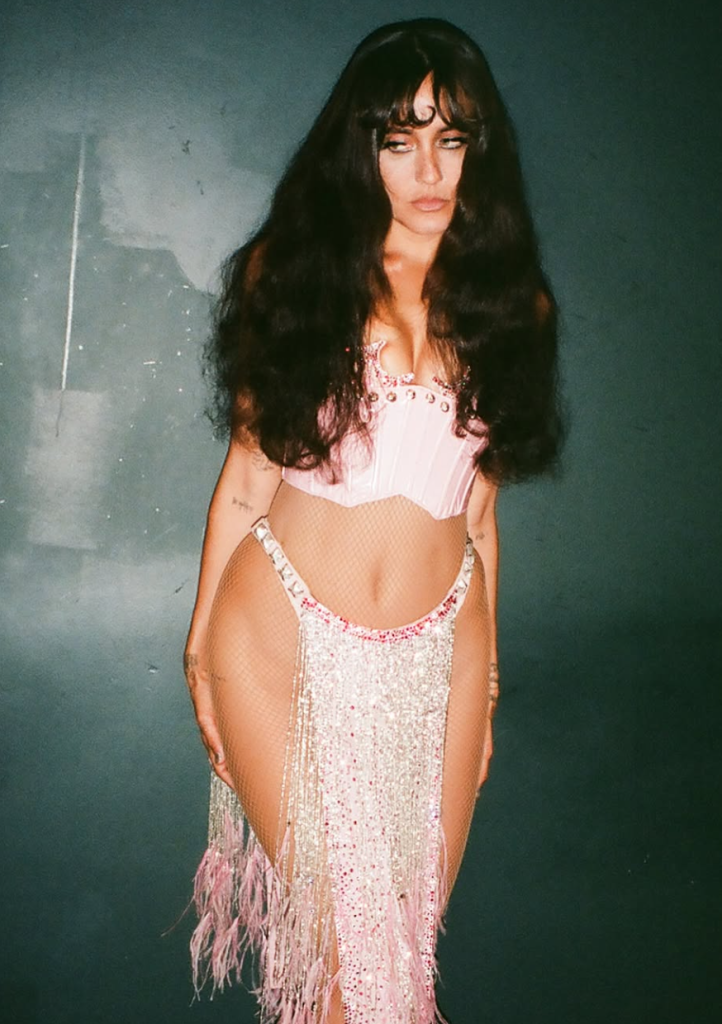
That may ultimately be the most compelling aspect of MUSE. Stark’s career has been defined in part by her ability to transform darkness into something beautiful, fashionable and cinematic. With “colorado,” she is exploring whether those feelings can stand on their own without quite so much protection.
The album’s title is particularly appropriate. A muse is traditionally someone or something that inspires the artist, often from a distance. Here, Stark appears to be turning that relationship inward, discovering that the person she has been trying to understand might also be the person she has been avoiding.
MUSE arrives November 6. “colorado” is available now.
Featured image credit: Pablo Gonzalez